
Randelle’s Reflections on Jordan Elementary HWCW First Quarter 2025
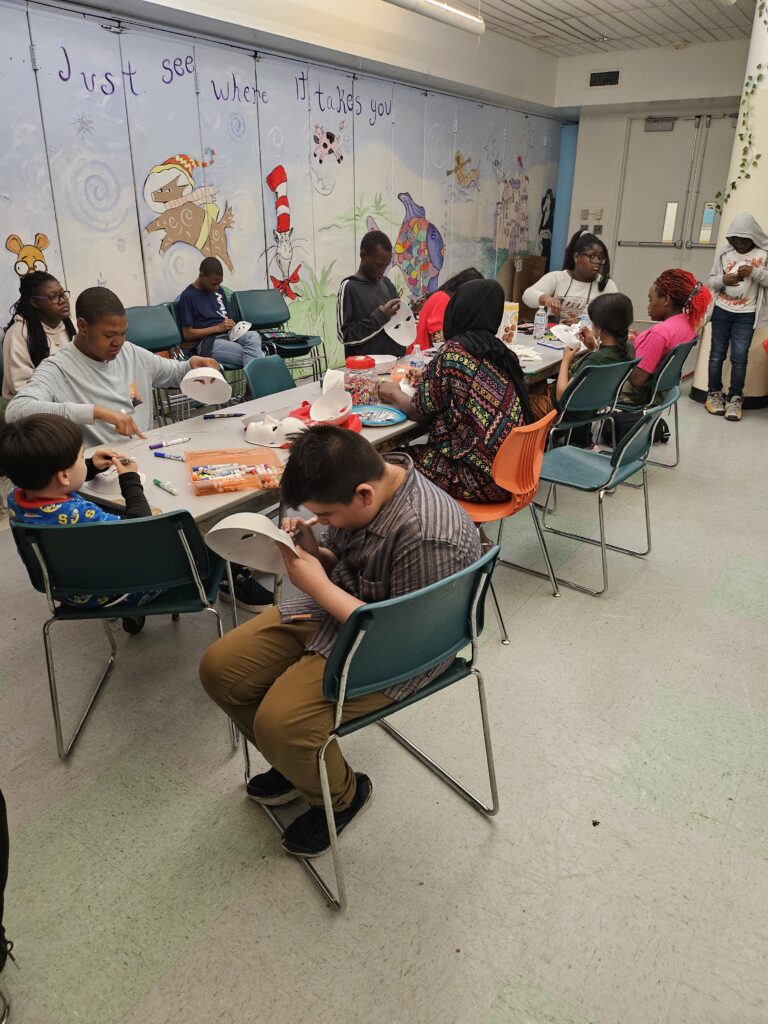
At a time when headlines echo fear and uncertainty, especially for immigrant communities, one after-school program in the community area of Rogers Park is quietly building something powerful: trust, joy, and a deep sense of belonging—through the circus arts.
This winter, youth in CircEsteem’s HomeWork & CircusWork program at Jordan Elementary were navigating a heavy emotional landscape. News of ICE raids sparked anxiety and fear, especially for students from immigrant and refugee backgrounds.
In January 2025, U.S. Immigration and Customs Enforcement (ICE) initiated “Operation Safeguard,” a nationwide effort targeting undocumented immigrants with criminal records. Over 100 arrests have been reported in the Chicago area since the raids began, contributing to an atmosphere of fear and uncertainty among immigrant communities like Jordan Elementary. Local leaders, such as Alderman Maria Hadden of the 49th Ward, expressed concern over the impact on families in Rogers Park, emphasizing that the presence of immigrant families is integral to the community’s fabric. Hadden highlighted that the threat of deportation has led many residents to fear everyday activities, such as taking their children to school or operating their businesses, thereby eroding the community’s sense of cohesion (Loyola Phoenix, January 2025, “Rogers Park Supporting Immigrant Community Amid Deportation Threats.”)
When youth shared their fears around immigration and being separated from loved ones, CircEsteem program staff did what they do best—held space. They listened. They affirmed. They shared resources. And they made room for healing.
“We’ve been able to create a space where youth feel safe enough to share real fears—like the possibility of their families being taken away. That vulnerability is huge, and we don’t take it for granted,” says CircEsteem Program Coordinator Randelle Villaber.
That space for healing took many forms: an open circle for conversation, printed “know your rights” materials for students and families, and—perhaps most powerfully—a collaborative spring performance piece inspired by the students themselves.
The theme of the show? Kindness.
The act the youth are developing explores what it means to break down barriers between communities through simple acts of kindness. In the performance, two groups are separated by a symbolic wall. Over time, through shared circus props and gestures of generosity, the wall is dismantled, and the groups come together—unified in movement, creativity, and trust.
This type of meaningful youth input is at the heart of CircEsteem’s work. Whether it’s choosing music, developing choreography, or helping solve real-world challenges—like how to communicate across language barriers—the program empowers youth to lead. One standout moment from the quarter involved two students who didn’t share a single language, yet managed to co-create a jump rope routine through gestures, laughter, and shared joy. Their high-fives and smiles spoke volumes. “In the beginning of the year, we had a lot of kids just needing to decompress,” Randelle reflects. “Now, they’re like, ‘Let’s go! We’ve got a show to build.’ That shift in energy is huge—it tells me something’s working.”
Engaging English Language Learners has been both a challenge and a success. Program staff have adapted quickly—using AI-powered translation devices for one-on-one interactions, shifting communication to platforms like WhatsApp that families already use, and working closely with the school’s Bilingual Advisory Committee to build trust. But enrollment paperwork remains a hurdle, particularly for families with uncertain immigration status, according to Randelle. “Trust-building is everything. Especially for immigrant families, paperwork feels risky. We’re not just handing out forms—we’re showing up, using WhatsApp, talking in person, and meeting people where they are.”
Despite the barriers, the program is growing. Four new ELL students were enrolled this quarter, and several more are auditing while their families navigate the paperwork process. Staff continue to meet families where they are—offering in-person conversations, flexible communication, and above all, patience.
Support for CircEsteem HomeWork & CircusWork staff and volunteers has also been a focus. This quarter, staff participated in a Mental Health First Aid training, deepening their awareness of how to recognize and respond to signs of distress in themselves and others. The training reinforced a foundational belief of the program: that adults of the program must care for their own emotional well-being in order to model the kind of presence and regulation they hope to inspire in youth.
“Kids are always watching,” Randelle shared. “If we show up stressed, irritated, and disconnected, they learn that. But if we show up grounded—even when things are hard—they learn that, too.”
As the program moves into spring, there’s a sense of momentum. Students are more engaged, more energized, and more connected. And maybe that’s the real story: in a world full of walls, these youth are building bridges—with kindness, creativity, and circus as their tools.